


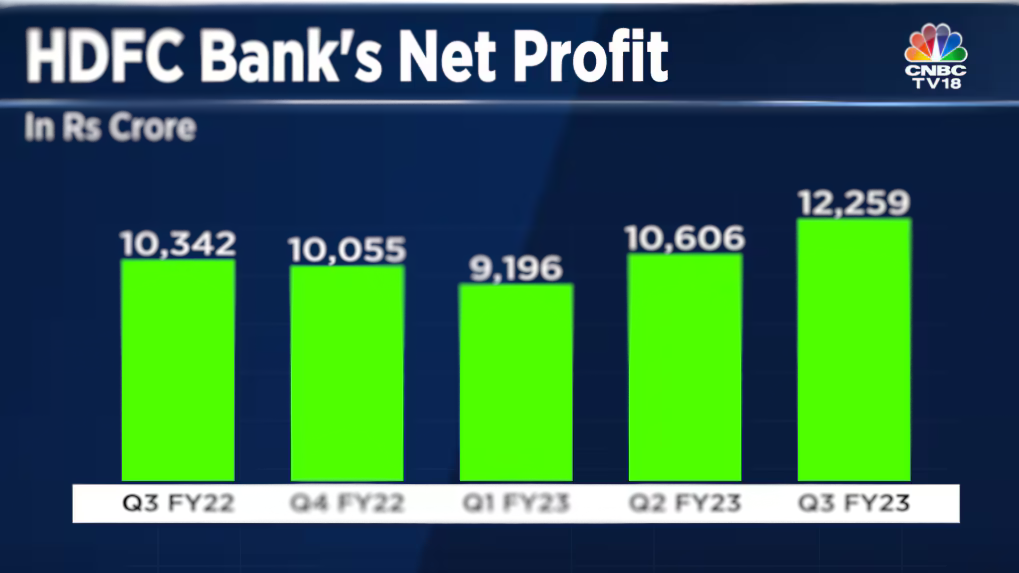
India’s largest private-sector lender, HDFC Bank, delivered a stronger-than-anticipated financial performance in the third quarter of the current fiscal year, helped by steady loan growth, improving lending margins, and stable asset quality. The results exceeded market expectations, reinforcing investor confidence in the bank’s post-merger strategy and balance sheet strength.
For the quarter ended December 31, HDFC Bank reported a standalone net profit of ₹186.53 billion, marking an 11.5% year-on-year increase compared with ₹167.35 billion in the same period last year. Market analysts had forecast a profit of approximately ₹183.7 billion, making the actual figure a clear beat on expectations.
The upbeat earnings come at a time when Indian banks are gradually benefiting from an easing interest rate environment, improved credit demand, and a more favourable margin outlook after months of pressure from rising deposit costs.
Net Interest Income and Margins Show Sequential Improvement
One of the key drivers of HDFC Bank’s stronger quarterly performance was a recovery in its net interest margin (NIM), a closely watched indicator of profitability for lenders. During the quarter, the bank’s NIM rose to 3.35%, up from 3.27% in the previous quarter, reflecting better pricing discipline and easing pressure from deposit repricing.
Net interest income (NII), which represents the difference between interest earned on loans and interest paid on deposits, increased 6.4% year-on-year to ₹326.2 billion. The sequential improvement in margins suggests that the bank is beginning to benefit from a more balanced interest rate cycle, after margins were compressed earlier due to faster loan repricing relative to deposits.
Industry analysts note that margin expansion across the banking sector has been supported by recent monetary policy actions and improved transmission of interest rates.
RBI Rate Cuts Support Margin Recovery
The Reserve Bank of India (RBI) has reduced its benchmark policy rate by a cumulative 125 basis points since February 2025, with the aim of stimulating consumption, business investment, and overall economic activity. While rate cuts initially pose challenges for banks—especially when deposit costs remain elevated—the current phase is beginning to favour lenders as funding costs stabilise.
Earlier in the year, many banks saw their margins squeezed as deposit rates adjusted upward more quickly than lending rates. However, the latest data suggests that this trend is reversing, allowing banks like HDFC Bank to regain some margin strength.
“The improvement in margins reflects better alignment between asset yields and funding costs,” said a senior banking analyst. “For large lenders with diversified loan books, the environment is gradually turning supportive.”
Loan Growth Driven by Corporate and SME Demand
HDFC Bank continued to post healthy credit growth, with total loans rising 12% year-on-year during the December quarter. Growth was primarily driven by increased demand from large corporate borrowers and small and medium-sized enterprises (SMEs), segments that have shown renewed appetite for credit amid improving economic conditions.
Retail lending remained steady, while corporate credit saw a pickup as companies stepped up capital expenditure and working capital borrowing. Small business loans also gained traction, reflecting improved confidence among entrepreneurs and better access to formal financing channels.
The bank’s diversified loan portfolio helped cushion volatility across segments, ensuring balanced growth without excessive risk concentration.
Deposits Continue to Expand Post-Merger
On the liability side, deposits grew 11.6% year-on-year, underscoring the bank’s ongoing efforts to strengthen its funding base following its merger with parent entity Housing Development Finance Corporation (HDFC) two years ago.
Since the merger, HDFC Bank has focused on deepening its deposit franchise to support loan growth and maintain competitive funding costs. Management has repeatedly highlighted deposit mobilisation as a strategic priority, particularly in a high-interest-rate environment where competition for retail and corporate deposits has intensified.
The steady growth in deposits during the quarter suggests that the bank’s strategy is yielding results, helping it maintain a healthy loan-to-deposit ratio and liquidity position.
Asset Quality Remains Stable
HDFC Bank’s asset quality remained largely unchanged, providing reassurance to investors concerned about potential stress in the banking system. The bank reported a gross non-performing asset (NPA) ratio of 1.24%, unchanged from the previous quarter.
Stable asset quality reflects disciplined underwriting standards and effective risk management, even as the bank expanded its loan book. There were no signs of a material deterioration in borrower repayment behaviour during the quarter.
Provisions for bad loans and other contingencies declined 10% year-on-year to ₹28 billion, indicating lower stress levels and improved recoveries. The reduction in provisions also supported profitability during the quarter.
Market Position and Outlook
As India’s largest private lender by market capitalisation, HDFC Bank plays a crucial role in the country’s financial system. Its performance is often viewed as a bellwether for broader banking sector trends.
The latest quarterly results suggest that the bank is successfully navigating the post-merger phase, balancing growth with profitability while maintaining asset quality. Analysts expect margins to remain stable or improve modestly in the coming quarters, provided deposit costs continue to ease and credit demand remains strong.
However, challenges remain. Competition for deposits is intense, regulatory scrutiny is high, and global economic uncertainties could affect corporate borrowing sentiment. Still, HDFC Bank’s scale, diversified operations, and strong balance sheet position it well to manage these risks.
Investor Sentiment
Investors and analysts largely welcomed the earnings beat, viewing it as a positive signal that the bank’s core profitability metrics are stabilising. The improvement in margins, combined with steady loan and deposit growth, reinforces confidence in the bank’s medium-term outlook.
“HDFC Bank’s results indicate that the worst of the margin pressure may be behind us,” said a market strategist. “The focus now will be on sustaining growth without compromising asset quality.”
Conclusion
HDFC Bank’s better-than-expected third-quarter performance highlights the resilience of India’s banking sector amid changing monetary conditions. With improving margins, stable asset quality, and healthy credit growth, the lender appears well-positioned to capitalise on a gradual economic recovery.
As interest rate dynamics continue to evolve and credit demand strengthens across sectors, HDFC Bank’s ability to balance growth, profitability, and risk management will remain closely watched by markets in the quarters ahead.