

Artificial intelligence is not just changing the products companies build. It is also changing how companies themselves are built. At Nvidia’s GTC 2026 summit, OpenEvidence founder and CEO Daniel Nadler made a bold prediction that captured the attention of the tech world: some of the most valuable companies in the future may operate with fewer than 100 employees.
That statement may sound surprising in an era where the largest tech companies employ tens of thousands of workers across the globe. But Nadler’s point reflects a growing belief across Silicon Valley that AI is dramatically reducing the amount of human labor needed to build, scale, and run powerful digital businesses. If that trend continues, the next generation of billion-dollar companies may look very different from the giants of the past.
A New Startup Model Powered by AI
Daniel Nadler leads OpenEvidence, an AI-powered medical information and clinical decision support platform used by doctors. The company has quickly emerged as one of the most closely watched startups in the healthcare AI space. In January, OpenEvidence raised $250 million in a Series D funding round, which reportedly doubled its valuation to around $12 billion.
What makes the company especially notable is not only its valuation but also its size. Nadler said OpenEvidence has fewer than 100 employees. Despite this, the platform is already influencing healthcare at a national scale. According to him, nearly 300 million Americans this year will be treated by a physician who uses OpenEvidence in some way during the care process.
That level of reach would have once required a massive organization, huge support teams, and years of infrastructure growth. Now, with AI handling information retrieval, decision assistance, and workflow support, a relatively small company can create enormous real-world impact.
Why Small Teams Can Now Build at Massive Scale
The reason this shift is happening is simple: AI allows people to do far more work than ever before. Tasks that once required entire departments can increasingly be handled by a combination of software, automation, and a much smaller number of skilled professionals.
Product development is moving faster because engineers can use AI coding tools to write, test, and debug software more efficiently. Customer support can be partially automated through AI assistants and chatbots. Marketing teams can produce content, campaigns, and insights with fewer resources. In research-heavy industries like healthcare, AI can organize and surface knowledge at a speed that human teams alone cannot match.
This does not mean people are no longer important. Instead, it means each employee can generate far more output than before. A small team, equipped with the right AI tools, can now perform at a level that would previously have required a workforce many times larger.
Nadler Credits Nvidia’s AI Ecosystem
During his remarks, Nadler credited Nvidia and the broader AI ecosystem for enabling this new kind of company. He pointed to the infrastructure and tools now available to startups as the reason why small teams can suddenly achieve extraordinary scale.
NVIDIA has become a central player in the AI boom because its chips and computing systems power many of the world’s leading AI models and applications. For founders building AI-first companies, access to advanced computing and model development tools has lowered barriers that once limited rapid growth.
Nadler suggested that this shift represents a completely new starting point for entrepreneurs. Rather than building large organizations first and then expanding products slowly, founders can now launch with lean teams and scale impact much faster than traditional companies ever could.
A Growing View Across the Tech Industry
Nadler is not alone in thinking this way. Across the technology sector, more leaders are saying that AI may redefine the relationship between company value and employee count.
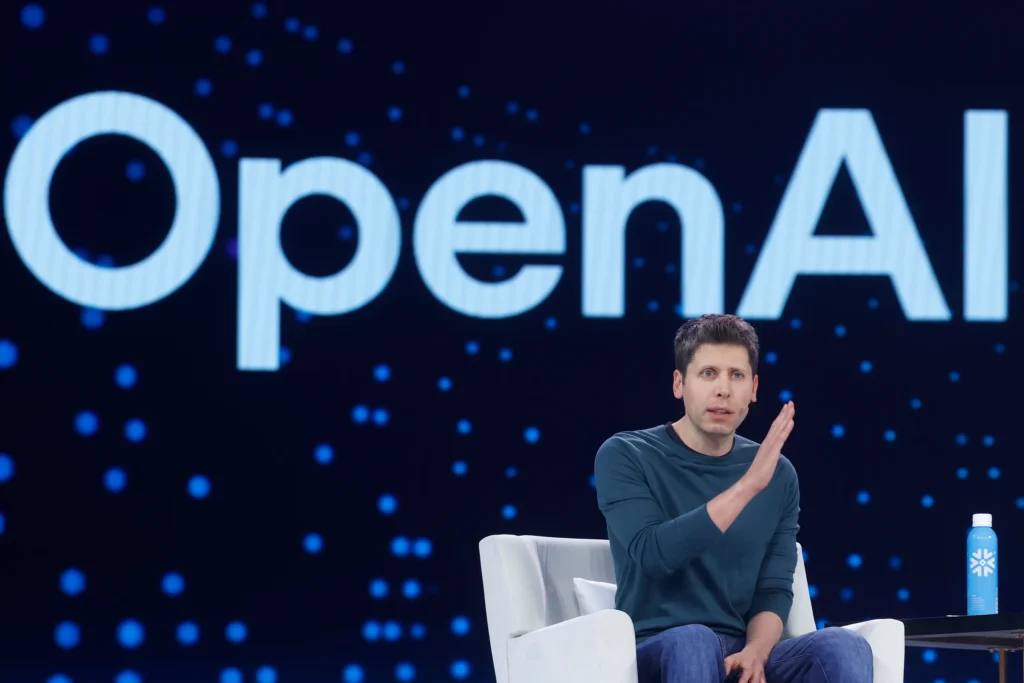
OpenAI CEO Sam Altman has often described AI as a collaborator that amplifies human creativity and productivity. In that vision, one talented person or a small team can achieve results that used to require entire divisions. AI becomes a force multiplier, helping smaller groups compete at levels that were once reserved for giant corporations.
This idea is also influencing how established companies think about workforce planning. Some firms are already using AI to automate internal processes, reduce manual work, and improve efficiency. In certain cases, that has also led to major restructuring decisions and reduced hiring needs.
The broader message is becoming clearer: in the AI era, scale may increasingly come from technology rather than headcount.
What This Could Mean for the Workforce
While the idea of ultra-efficient companies is exciting for founders and investors, it raises deeper questions for workers and the broader economy. If future companies can generate billions in value with very small teams, what happens to the jobs that larger organizations used to create?
This is one of the most important debates surrounding AI today. On one side, AI can boost productivity, unlock innovation, and help businesses grow faster. On the other hand, it can reduce the need for traditional roles, especially those built around repetitive, manual, or information-heavy tasks.
Research from firms like McKinsey has warned that companies hoping to benefit fully from AI will need more than just new software. They will need a full organizational transformation. That means rethinking workflows, redefining job roles, and investing in training and upskilling so workers can adapt to changing demands.
In many cases, AI may not eliminate jobs outright. Instead, it may change them. Employees will need to work alongside AI systems, use them effectively, and focus on higher-value tasks that require judgment, creativity, empathy, and strategic thinking.
The Rise of Lean, High-Impact Businesses
The traditional image of a successful tech company has long been tied to growth in staff numbers, office space, and layers of management. But AI may be rewriting that formula.
Future tech giants may no longer need huge teams to dominate their industries. Instead, they could rely on compact groups of highly skilled employees supported by powerful AI systems that handle everything from analysis to operations. In that world, company size may matter less than the quality of its tools, talent, and execution.
This could create a new kind of business model: lean, fast-moving, highly automated, and capable of reaching millions of users without employing thousands of people. Startups that once struggled to compete with large incumbents may find themselves at an advantage if they can use AI more intelligently and move more quickly.
Opportunity and Uncertainty Go Hand in Hand
There is no doubt that AI is opening the door to a new era of entrepreneurship. Founders can build faster, smaller teams can achieve more, and valuable companies may emerge with structures that would have seemed impossible just a few years ago.
At the same time, this transformation will not be simple. Businesses will need to rethink how they operate. Workers will need new skills. Policymakers and economists will need to grapple with what it means for a small number of employees to generate massive enterprise value.
Daniel Nadler’s prediction may sound radical today, but it reflects a larger truth already taking shape across the tech world: AI is changing not only what companies do but also what companies are.
If this trend continues, the next generation of tech giants may not be known for huge workforces or giant campuses. They may instead be defined by small teams, powerful AI systems, and a level of productivity that reshapes the future of business itself.