
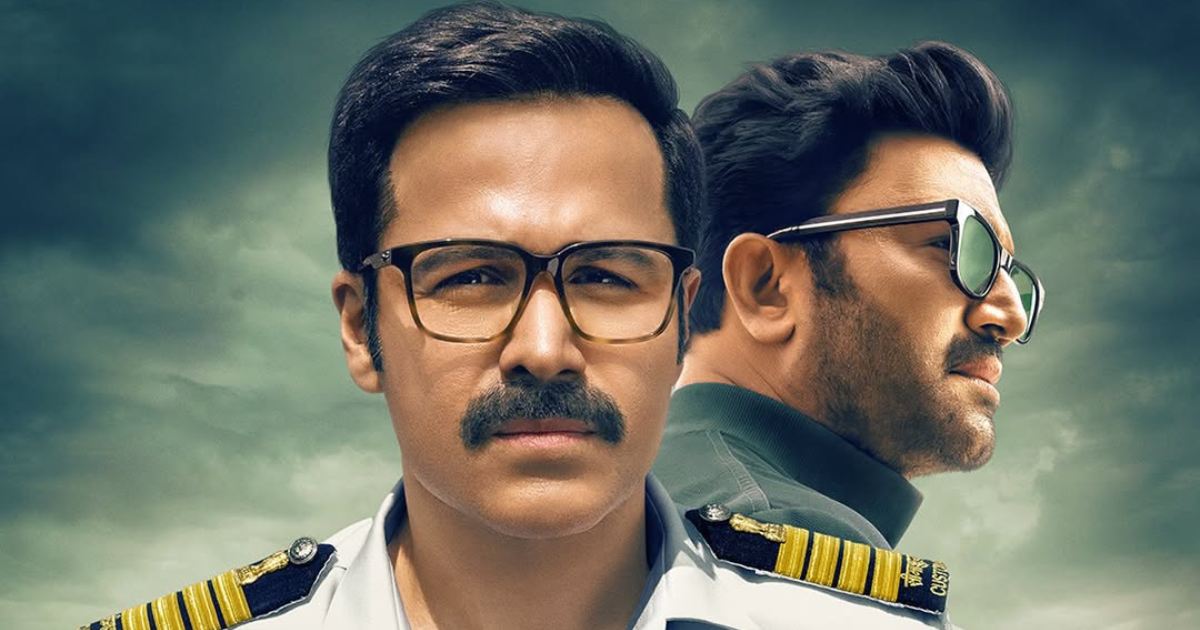
Neeraj Pandey’s latest seven-episode series, Taskaree, has arrived on Netflix, promising a deep dive into the high-stakes world of smugglers and Customs officials at Mumbai International Airport. With a premise rooted in crime, law enforcement, and moral dilemmas, the show tries to combine suspense with the bureaucratic grind of one of India’s most complex government departments. While it succeeds in presenting a polished procedural drama, it often struggles to keep the viewer fully engaged, leaving an impression of dutiful effort rather than thrilling entertainment.
Premise and Plot
Taskaree centers around a group of customs officers tasked with intercepting contraband entering India. The officers, portrayed as honest, committed, and tireless, are on constant alert for “”taskars”—smugglers who traffic everything from luxury goods to exotic animals, with gold being the most frequently smuggled commodity.
The series begins with a relatively routine depiction of Customs operations, highlighting both the monotony and intensity of their work. The arrival of Prakash (Anurag Sinha) as the new officer in charge shakes things up. Under his leadership, the central trio—Arjun (Emraan Hashmi), Mitali (Amruta Khanvilkar), and Ravinder (Nandish Sandhu)—is given the mission to dismantle a gold smuggling ring led by the cunning and ruthless Chaudhary (Sharad Kelkar).
Chaudhary’s operations are methodical and dangerous, supported by a loyal but equally nefarious team, including Suresh (Jameel Khan), Sayyed (Ekavali Khanna), and Priya (Zoya Afroz). The show portrays the cat-and-mouse game between the smugglers and Customs officers with an emphasis on procedure and discipline, showcasing the careful planning, surveillance, and risk assessment that go into intercepting contraband.
Direction and Screenplay
Neeraj Pandey co-directs the series alongside Raghav M. Jairath, with the screenplay co-written by Pandey and Vipul K. Rawal. As expected from Pandey, the series emphasizes efficiency, structure, and narrative clarity. Each episode is tightly packed with procedural sequences, meetings, raids, and surveillance, reflecting Pandey’s trademark focus on goal-oriented storytelling.
However, this focus on task completion often comes at the expense of dramatic flair. Subplots involving personal relationships, romance, and family dynamics are introduced but remain superficial, failing to add significant emotional weight. Even the deaths of certain characters, which could have added gravitas, pass with minimal impact. This clinical approach ensures that the narrative stays on track but leaves the series feeling more like a work report than a gripping crime drama.
Visual and Aesthetic Choices
Visually, Taskaree adopts a muted, businesslike aesthetic. The corridors, offices, and airports are shot with a functional approach, lacking the visual dynamism that could elevate the tension or suspense. While the storytelling remains focused, the absence of stylistic flair contributes to a sense of monotony. Even sequences that involve smuggling operations in foreign lands—complete with gold bars, drugs, and luxury watches—fail to elicit the thrill that such high-stakes scenarios could naturally generate.
One exception is the fourth episode, which focuses on a customs officer played by Hemant Kher. This episode brings genuine suspense and raises moral questions about honesty and integrity in a world rife with corruption. Moments like these suggest that the show could have delivered more gripping drama if it had leaned into tension and character development instead of purely procedural storytelling.
Characters and Performances
The characters in Taskaree are conceived as archetypes: the diligent officer, the ruthless smuggler, and the morally ambiguous middlemen. Arjun and his colleagues are portrayed as paragons of virtue, a “rare species” of committed government servants. However, their depiction often borders on blandness. Their diligence is unquestionable, but their personalities feel muted, leaving them less relatable or engaging.
Among the ensemble cast, only a handful of performances stand out. Sharad Kelkar, as Chaudhary, effectively conveys the calculated menace of a seasoned smuggler. Jameel Khan, Virendra Saxena, and Hemant Kher bring life to otherwise routine roles, providing occasional bursts of energy in an otherwise steady, unexciting narrative. Emraan Hashmi, while competent, struggles to imbue Arjun with charisma beyond dutiful heroism, and the romantic and familial subplots feel underdeveloped.
The interplay between the officers and smugglers is well-structured but predictable. Chaudhary, like Pandey’s characters, is goal-oriented and pragmatic. The lack of character-driven surprises makes the narrative easy to follow but reduces opportunities for tension or suspense to flourish.
Themes and Narrative Focus
Taskaree fits neatly into Neeraj Pandey’s oeuvre, which often revolves around professional integrity, moral dilemmas, and mission-oriented narratives. The series underscores the contrast between law enforcement and criminal enterprises, exploring the meticulous processes that go into catching taskers. It highlights the challenges faced by customs officers in an environment rife with corruption, pressure, and high stakes.
Yet, the series rarely delves into the personal cost of these challenges. The human dimension—fear, moral conflict, ambition, or personal sacrifice—is largely absent, leaving the narrative more functional than emotionally compelling. For viewers seeking character-driven drama or intense thrills, Taskaree may feel dutiful but dull.
Pacing and Suspense
Pacing in Taskaree is steady but uneven. Some episodes, like the fourth, manage to build suspense effectively, using small-scale conflicts and moral dilemmas to keep viewers engaged. However, much of the series is occupied by procedural work: patrolling corridors, checking luggage, and strategizing raids. While these sequences are realistic and add authenticity, they lack narrative propulsion, making the show feel slow at times.
The series also explores a variety of smuggling methods, from the mundane to the creative, giving viewers an educational glimpse into Customs operations. Unfortunately, the execution often feels more like an instructional video than an edge-of-the-seat thriller.
Overall Assessment
Taskaree is meticulously structured, morally clear, and professionally executed, but it ultimately lacks the narrative spark that transforms a procedural drama into a compelling binge-watch. Its strengths lie in its faithful depiction of Customs operations, clear character goals, and the occasional moment of suspense. Its weaknesses are in character depth, visual engagement, and emotional resonance.
For viewers seeking a sober, informative look at the challenges faced by law enforcement in India, Taskaree delivers. But for those craving gripping drama, unpredictable twists, or emotionally charged performances, it may come across as too dutiful, predictable, and visually subdued.
Conclusion
In the end, Taskaree is a show that prioritizes task completion over storytelling flair. It is a precise, professional portrayal of customs officers at work, with competent performances and a structured narrative. Yet, the series never quite captures the thrill, tension, or human complexity that could have made it truly memorable.
Neeraj Pandey has created a polished series that achieves its procedural objectives but leaves viewers wanting more—more drama, more excitement, and more depth. Taskaree is watchable, certainly, but it is far from riveting, making it a series that may appeal more to admirers of methodical storytelling than fans of edge-of-the-seat crime thrillers.
Rating: ★★☆☆☆
Taskaree is streaming now on Netflix